7 White Label SEO Practices That Support Client Retention and Agency Growth
7 White Label SEO Practices That Support Client Retention and...
Read More →
White-label SEO helps agencies improve client retention and support sustainable growth through reliable partnerships, customized strategies, transparent reporting, and consistent communication. By combining quality-controlled workflows with measurable performance and continuous improvement, agencies can build client trust, manage delivery efficiently, and scale their services.

White-label SEO can give agencies additional delivery capacity, but client retention still depends on how the service is managed. A strong operating model combines reliable fulfillment, clear expectations, client-specific priorities, transparent reporting, consistent communication, quality control, and ongoing reassessment. These practices can make service performance easier to evaluate and reduce avoidable delivery and communication problems, but they do not guarantee client retention, rankings, or agency growth.
MethodologyThis guide combines Google Search Central’s current guidance on evaluating SEO providers with recurring white-label delivery patterns Growzify observes around onboarding, quality control, reporting, communication, and account management. Google does not publish a formula that links these seven practices to agency client retention rates, so the framework should be treated as Growzify practitioner guidance rather than a proven retention model. Where Google guidance is relevant, for example, provider transparency, references, ranking guarantees, and third-party SEO claims. We distinguish that guidance from Growzify’s operational recommendations.
In a growing digital economy, getting new clients is only one part of building a successful digital marketing agency. The real challenge is keeping those clients happy, showing them the value of your work. A client-specific roadmap makes it easier to explain why the selected work is relevant to that client’s market, constraints, and objectives.As more businesses invest in their online presence, agencies need reliable ways to deliver SEO services without stretching their teams.
This is wherewhite-label SEOServicescan help accelerate your business. It allows agencies to offer SEO services under their own brand while an experienced partner handles the delivery work. This can make it easier to manage multiple clients, expand service offerings, and maintain consistent quality without having to build every capability in-house.
However, outsourcing alone does not guarantee client retention. Clear communication, realistic goals, transparent reporting, and reliable workflows all play an important role.
So, how can agencies use white-label SEO to build stronger client relationships while growing their businesses? Let’s explore seven practical best practices that can help.
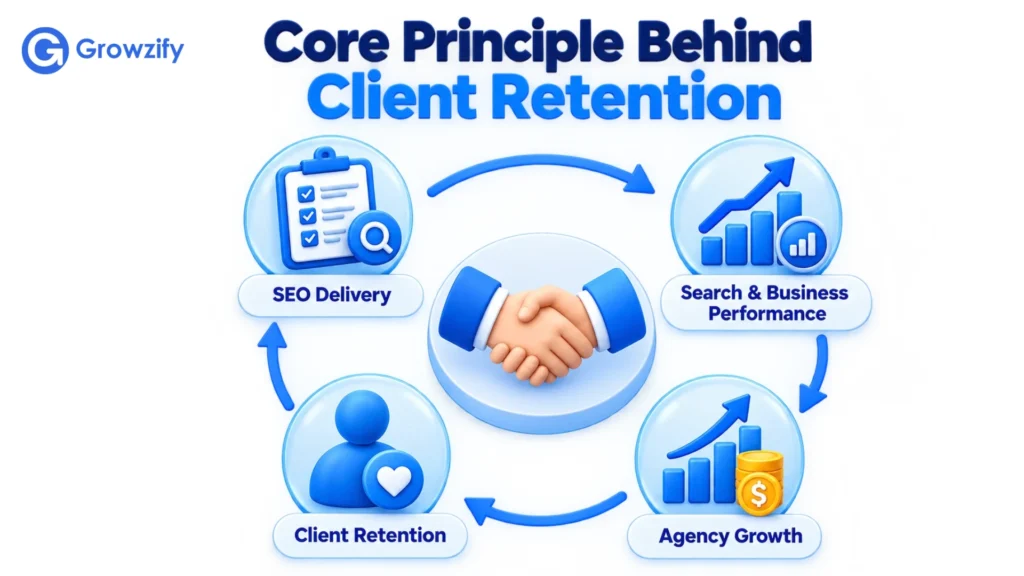
A successful white label SEO partnership requires more than completing deliverables. Agencies need to understand client expectations, validate completed work, demonstrate business value, communicate progress, and identify risks before they affect the relationship. White Label Client Health Framework brings these elements together through seven stages.

Clients do not renew simply because an agency completes its task list. They renew when the service continues to align with their goals, expectations, available evidence, and business priorities. A structured framework helps agencies assess that value honestly and make informed decisions about the relationship. Four Outcomes Agencies Should Measure Separately
Improved rankings do not automatically guarantee client retention, and strong retention does not automatically prove that SEO caused business growth. Evaluating these outcomes separately gives agencies a more reliable picture of performance and partnership health.
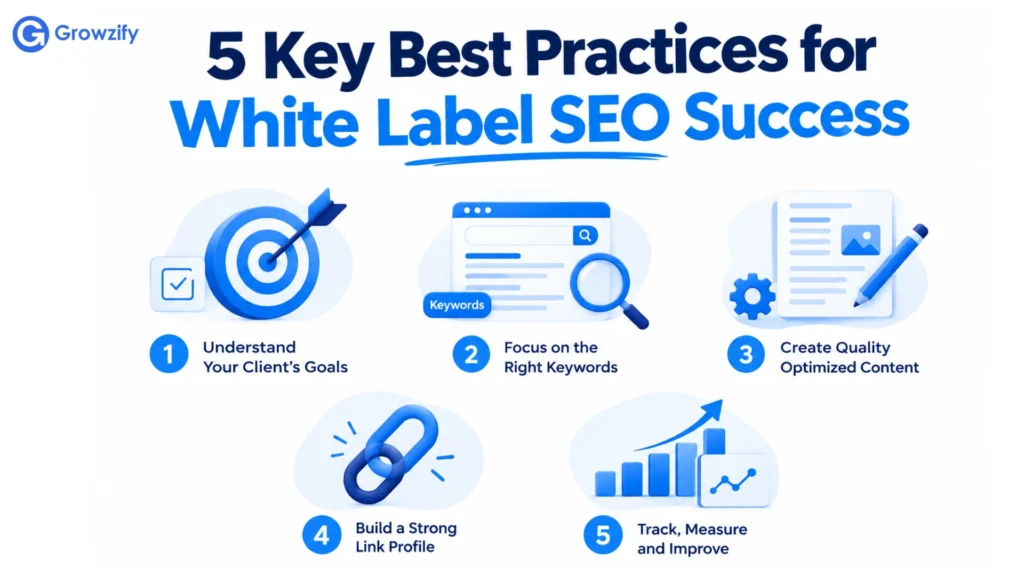
What every business wants is to keep SEO clients happy and improve rankings. Every client wants to see meaningful progress, understand the value of your work, and feel confident that their SEO strategy supports their business goals. With the right white label SEO partner, clear communication, and a well-managed workflow, agencies can deliver consistent results while expanding their services. Let’s explore seven practical white label SEO best practices that help build client trust, strengthen long-term relationships, and support sustainable agency growth.
A white label SEO partner has a direct influence on the quality of service your clients receive. If deliverables are delayed, reports lack clarity, or SEO recommendations are poorly executed, your agency may have to deal with the consequences.Before choosing a provider, review thesequestions to ask before choosing a white label SEO partnerto evaluate their expertise, communication, and ability to support your agency’s needs.
How reliable is the SEO partner?
Are reports clear and transparent?
Can they meet your clients’ needs?
That is why choosing a partner should involve more than comparing prices. Look for a provider that understands technical SEO, keyword research, content optimization, link building, and performance tracking. Their services should also match your clients’ needs and your agency’s long-term plans. Before committing, evaluate their communication process, reporting standards, turnaround times, and ability to handle changing workloads.
Best practice:Start with a small project or trial engagement. Review the quality of the work, communication, and delivery process before expanding the partnership. A dependable partner helps your agency maintain service quality without requiring you to build every SEO capability internally.
Imagine a client expects more. Three months is part of this example, not a universal SEO result timeframe, but your agency focuses its updates entirely on keyword rankings. Even if rankings improve, the client may feel disappointed because the work does not appear connected to their expectations. This is why setting clear goals at the beginning matters.
During onboarding, discuss the client’s business objectives, target audience, current website performance, competition, and expectations. Then translate those priorities into realistic SEO goals and measurable indicators. Depending on the business, these may include:
It is also important to explain that SEO results depend on factors such as competition, website condition, content quality, and the time required for search engines to respond to changes.
Best practice:Agree on the scope of work, reporting schedule, responsibilities, and performance indicators before the campaign begins.
When clients understand what the strategy aims to achieve and how progress will be evaluated, it becomes easier to maintain trust throughout the engagement.
A strategy that works for an e-commerce store may not be suitable for a local service business. Similarly, a SaaS company targeting national search demand will have different SEO priorities from a restaurant trying to attract nearby customers.
Using the same template for every client might save time initially, but it can overlook the opportunities that matter most to each business.
White label SEO should provide a structured delivery process while leaving room for customization. Choosing theright white label SEO serviceshelps agencies adapt their approach to each client’s industry, audience, and business goals.
For example:
Start by understanding the client’s audience and how potential customers search for their services. Use that information to prioritize the work.
Best practice:Build each SEO roadmap around the client’s industry, competition, resources, and business objectives rather than relying on a generic checklist.
Personalized strategies make the service more relevant. A client-specific roadmap makes it easier to explain why the selected work is relevant to that client’s market, constraints, and objectives.
Clients should not have to interpret a spreadsheet full of metrics to understand whether their SEO campaign is progressing.
Reporting is an opportunity to show what has been completed, what has changed, and what should happen next. It also helps explain why certain activities matter to the client’s business. A useful white label SEO report should cover three main areas:
For instance, rather than reporting only that ten service pages were optimized, explain which pages were improved, what issues were addressed, and how their performance will be monitored.
If the cause of a performance change is uncertain, say so. Explain what changed, what has been checked, what remains a hypothesis, and what will be investigated next
Best practice:Use a consistent reporting format that combines meaningful metrics with plain-language explanations and actionable recommendations.
Clear reporting helps clients recognize the value of the work and makes performance discussions more productive.
Even when SEO work is progressing well, poor communication can make clients question the partnership.Effective client communication requires a clear process for sharing progress, requesting decisions, and addressing issues before they affect delivery or client confidence. A structured communication framework helps agencies determine what to communicate, when to communicate, and how urgently a response is needed.
A well-defined escalation process helps agencies prioritize communication according to urgency rather than treating every update equally. By setting clear expectations for routine reporting, decision-making, and incident handling, white-label SEO teams can reduce confusion, resolve blockers faster, and maintain stronger client relationships.
A client who receives no updates for several weeks may assume that little is happening. On the other hand, regular, useful communication helps them understand the work and feel involved in important decisions. Agencies can establish a simple communication routine that includes:
The goal is not to schedule unnecessary meetings or send daily updates. It is to provide the right information at the right time.
For example, if a technical SEO issue requires developer support, explain the issue, its potential impact, who is responsible for resolving it, and what happens next.
Best practice:Set communication expectations during onboarding and keep updates consistent throughout the engagement.
When clients know what is happening and whom to contact, the relationship becomes easier to manage and more resilient when challenges arise.
As an agency acquires more clients, managing every SEO task manually becomes increasingly difficult. Research, content briefs, technical audits, approvals, implementation, and reporting can quickly create operational bottlenecks.
White label SEO can help distribute the workload, but outsourcing alone does not guarantee efficiency. A clear workflow is still necessary. Start by documenting recurring processes and defining who is responsible for each stage.
A practical workflow might look like this:
Client onboarding, SEO audit, Strategy development, Task assignment, Implementation, Quality assurance, Reporting and Optimization
Each stage should have clear requirements, deadlines, and approval steps. Templates and project management tools can make repetitive tasks easier to manage, while automated checks can help identify issues that require attention.
However, automation should support human review rather than replace it. Content accuracy, technical recommendations, brand alignment, and final deliverables still need appropriate quality checks.
Best practice:Standardize repeatable tasks, document responsibilities, and establish quality-control checkpoints before scaling delivery across more clients.
A documented workflow can reduce avoidable operational friction and make additional client capacity easier to manage, provided staffing and quality-control capacity scale with it.
SEO is an ongoing process. Search behavior changes, competitors publish new content, websites evolve, and search engine updates can affect visibility. That means a strategy that performed well six months ago may need adjustments today. Instead of repeating the same tasks every month, use performance data and client feedback to decide what should happen next.
For example, if a service page receives organic traffic but generates few enquiries, review whether its content matches search intent, explains the service clearly, and provides a useful next step. If important pages are not gaining visibility, investigate technical issues, content gaps, competition, and internal linking before deciding on the next action. Regular optimization can include:
It is equally important to communicate what has been learned from these activities and how the strategy will adapt.
Best practice:Treat every reporting cycle as an opportunity to review results, identify gaps, and prioritize the next set of improvements.
Clients are more likely to see the value of a long-term partnership when they can understand how the work evolves with their business needs.
When evaluating a white-label SEO provider, agencies should review client references and understand the reasoning behind recommendations. Ensure that proposed changes are clearly explained. Google advises businesses to check references and warns that no provider can guarantee a ranking. Similarly, third-party SEO tools cannot access Google’s internal ranking data or guarantee search performance. These checks help agencies set realistic expectations and evaluate providers on transparency, expertise, and measurable progress.
Sources:Google: Do You Need an SEO?|Google: Third-Party SEO Services
A reliable delivery partner can support consistent execution, clear goals can guide strategy, and customized work can address client needs. Transparent reporting makes evidence clearer, can reduce avoidable risk, and can improve operational consistency.
Together, these elements create a more dependable service experience.
| Practice | What it protects | Evidence to monitor |
| Partner selection | Delivery reliability | Rework, missed dates, QA issues |
| Expectations | Scope/value alignment | Scope disputes, unresolved expectations |
| Client-specific strategy | Strategic relevance | Priority acceptance, business-fit feedback |
| Reporting | Evidence clarity | Data discrepancies, unanswered performance questions |
| Communication | Relationship continuity | Open issues, response/escalation delays |
| Workflow | Operational consistency | Task aging, implementation/validation status |
| Continuous improvement | Ongoing relevance | Decisions changed based on evidence |
White label SEO can also help agencies expand their offerings without immediately hiring a full in-house SEO team. This gives them more flexibility to manage demand, explore new services, and focus internal resources on client relationships and business development.
However, sustainable growth still depends on choosing the right clients, maintaining realistic expectations, and delivering work that meets agreed standards.
Growing an agency takes more than winning new clients. It means delivering quality services consistently, managing projects efficiently, and building relationships that last. White label SEO offers a practical way to expand your services, support more clients, and scale your business without overburdening your in-house team.
With the right partner, a transparent workflow, and strategies tailored to each client’s goals, you can deliver more value while keeping your operations organized.SEO outsourcingcan help agencies manage workloads efficiently, expand service capacity, and support long-term business growth.
Ultimately, successful white label SEO depends on reliable partnerships, clear communication, measurable progress, and continuous improvement. By bringing these elements together, your agency can strengthen client retention, improve service delivery, and build a sustainable foundation for growth.
The goal is simple: deliver value your clients can see, build trust they can rely on, and create room for your business to grow.
Client retention is supported by more than SEO execution alone. Agencies need clear expectations, reliable delivery, client-specific priorities, transparent reporting, consistent communication, documented quality control, and a process for diagnosing problems and adapting the strategy. These practices can reduce avoidable service friction and make the value of the engagement easier to evaluate, but they do not guarantee renewal or SEO results.
Separate client health from SEO performance. Review whether scope and expectations remain aligned, deliverables are being implemented and validated, important issues are being resolved, the client understands the evidence and next priorities, and there is a credible reason to continue the engagement. Use simple evidence-based statuses such as Healthy, Watch, or At Risk rather than pretending client retention can be reduced to one universal score
Effective practices include setting realistic expectations, conducting SEO audits, creating tailored strategies, maintaining quality standards, monitoring performance, and delivering regular reports. Agencies should also review deliverables, communicate proactively, and adjust strategies based on client goals and changing search performance.
Agencies can maintain quality by establishing clear deliverables, reviewing the provider’s work, documenting approval processes, and monitoring technical SEO, content quality, and link-building practices. Regular quality checks help identify issues before they affect client websites or campaign performance.
Transparent SEO reporting helps clients understand what work has been completed, how organic performance is changing, and what actions are planned next. Reports should explain relevant metrics, such as organic traffic, keyword visibility, conversions, and completed deliverables, while providing context for performance changes.

At Growzify, we are dedicated to helping your business achieve its goals. Are you Ready to take the next step?


Content Gap Analysis For Large Enterprise Business Websites Content gap analysis for large enterprise business...

Content Mapping for Conversions: A Guide for Large Enterprise Websites Most enterprise sites don’t have...

Top 10 AI SEO Strategies to Get Ranked on AI Searches AI answers compress the...

How to Manage SEO Outsourcing Across Multiple Teams A single-owner outsourcing model works fine until...
How to Find and Compare Local SEO Outsourcing Providers Finding a local SEO outsourcing provider...

Inside a White Label SEO Campaign: How the Work Gets Done Clients see a single...

How to Vet an SEO Outsourcing Provider Before You Sign a Contract A polished proposal...

Multilingual SEO Best Practices: Optimize Your Multi-Language Website Translating a page and localizing it for...
Call Now






Growzify digital team is very effective, and easy to work with. Very strong communication and always up for suggestions. Saw 300% growth in web traffic 170% growth in revenue through Facebook ad’s & Amazon. I recommended them to my fellows and they turned their online business into a money making machine.