How to Manage SEO Outsourcing Across Multiple Teams
How to Manage SEO Outsourcing Across Multiple Teams A single-owner...
Read More →
A polished proposal and a strong sales call are not enough to verify how an SEO provider will actually work on your account. The important claims should be checked before the contract is signed, not after the first disappointing month. Don’t just verify the result a provider shows you; verify how they say they produced it.

Vetting an SEO outsourcing provider before you sign a contract means tracing the provider’s important claims through evidence rather than accepting a sales pitch: reviewing real work samples, checking references directly rather than reading testimonials on their own site, confirming the actual method behind any promised outcome, and watching for a short list of known red flags, guaranteed rankings, secretive methods, and unsolicited outreach among them. The goal isn’t finding a perfect provider. It’s ruling out the ones whose claims, methods, or access requests could put your site, data, or budget at risk before you’ve committed to them.
Methodology:This guide draws on Google Search Central’s own documentation on evaluating SEO providers, including its guidance on generative AI/AEO/GEO advice and third-party SEO tools, and on Google’s spam policies, alongside recurring patterns Growzify observes helping businesses evaluate outsourced SEO partners. The composite example later in this article is illustrative rather than a specific client case.
A bad hire in most departments costs time and money. A bad SEO provider can create search-visibility problems that may require remediation even after the relationship has ended.
Google’s own guidance on evaluating SEO providersis direct about the downside: some unethical SEOs use techniques that violate Google’s spam policies, which can result in a negative adjustment to a site’s presence in search, or removal entirely.
The substantive vetting should happen before the contract is signed and before the provider receives broader execution access, not merely as a clause written into the agreement afterward.
Contract review is a separate, later step that converts the promises and safeguards validated during vetting into enforceable terms; it doesn’t substitute for the vetting itself. Identifying risk before access is granted is significantly easier than remediating problematic work after implementation.
A provider shouldn’t pass vetting because one impressive case study, testimonial, or sales presentation sounds convincing.
A strong result from another client can show relevant experience. It can’t prove the same result will happen on a different site. The goal of vetting isn’t proving a provider will succeed; it’s establishing that its claims are credible, its methods are understandable, its risks are acceptable, and its operating model actually fits before you commit budget and access to it.

A sales call is designed to sound reassuring. Work samples and reference conversations give you evidence that can be questioned and cross-checked, rather than relying only on sales claims.
Ask for actual examples of work on sites in a comparable industry or size range, not a generic case study deck. Confidentiality isn’t always the provider’s choice to waive: white-label agreements, client privacy terms, and regulated-industry restrictions can genuinely prevent disclosure. Ask for anonymized or redacted examples and a detailed walkthrough of the methodology, responsibilities, and measurable outcomes where full disclosure isn’t possible.
When reviewing any case study, look beyond the headline number and check thestarting conditionbefore the engagement and the specificscopethe provider actually controlled.
Then review thetime period, the work performed, and thedata sourceused to measure the outcome. Check whether other major changes happened during the same period that could have influenced the result independently.
It also helps to see whether the improvementpersisted over timeand how much of the outcome came from the provider versus the client’s own team. A strong-sounding result with no clear explanation of the method is a reason to slow down and investigate further, not move faster.
A testimonial gives you a curated statement the provider chose to publish. A direct reference conversation lets you ask follow-up questions about communication, deliverables, problems encountered, and actual outcomes.
Beyond the basics, it’s worth asking what went wrong during the engagement and how the provider responded, and whether scope, pricing, the assigned team, or methodology materially changed after signing, questions that reveal more about provider maturity than “would you recommend them.”
Google’s own guidance recommends checking past-client references directly for exactly this reason. Keep in mind that provider-supplied references may still be selectively chosen, so treat them as one evidence source among several, not independent proof on their own.
Google’s own guidance identifies several warning signs worth checking before hiring an SEO provider.
Treat guaranteed ranking positions as a red flag. Google specifically states that “no one can guarantee a #1 ranking on Google” and warns against providers claiming a “special relationship” with Google or a “priority submit” that doesn’t exist.
The same skepticism applies to a newer version of the same pitch: a guaranteed AI Overview inclusion, guaranteed AI Mode visibility, or a guaranteed citation from ChatGPT, Gemini, or Perplexity is just as unverifiable a promise as a guaranteed ranking, for the same underlying reason, no outside party controls those systems either.
A provider who won’t clearly explain what they intend to do to your site is a provider you can’t actually evaluate. Google’s guidance flags this directly, noting that a trustworthy provider discloses the changes it makes rather than treating its process as proprietary and unexplainable.
A provider can reasonably protect its own internal templates, tooling, or workflow as proprietary while still explaining, in plain terms, what actions it intends to take on your site, the methodology behind them, and any material risks involved; the line worth watching for is refusing that second, client-facing explanation, not declining to hand over an internal playbook.
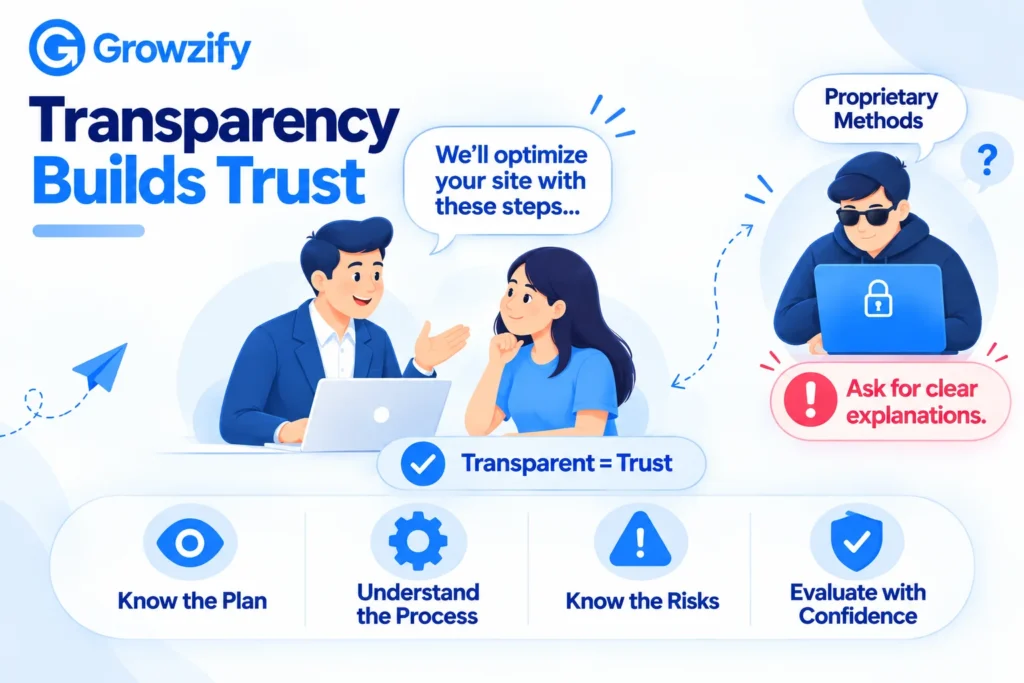
An unexpected email or cold call promising SEO results is worth extra scrutiny. Google’s own guidance specifically calls out cold outreach from SEO firms as a pattern worth being wary of, not a disqualifier on its own, but a reason to look closer before proceeding.
Be cautious of a provider claiming its software, scoring system, or AI-visibility tool is “Google approved,” has privileged access to Google’s ranking data, or can reveal how Google’s ranking systems actually work internally.
Google states plainlythat it doesn’t evaluate or endorse third-party SEO tools and that those tools don’t have access to its internal ranking data, and it specifically recommends checking a third-party tool’s recommendations against Google’s own official guidance before making significant changes based on them.
Ask directly whether the provider buys links intended to pass ranking credit, relies on excessive link exchanges, uses automated link-creation programs, or places links through low-quality directories.
A useful way to press past a simple “no” is asking the provider to walk through how a typical placement is actually sourced, what consideration changes hands if any, who controls the publishing decision, and how any paid or sponsored relationship is handled, since that’s harder to answer with marketing language than a yes-or-no question.
Google’s own spam policies identify each of these practices specifically as link spam. Paid or sponsored placements aren’t automatically a problem; Google’s documentation is explicit that links exchanged for money or goods are fine as long as they’re qualified with arel=”nofollow”orrel=”sponsored”attribute so they don’t pass ranking credit. If a provider can’t clearly explain how paid or sponsored placements are handled, ask for their written linking policy before approving the approach.
Ask a provider selling AI Overview, AI Mode, or broader AI-search optimization to separate three distinct kinds of claims: what’s grounded in documented platform guidance from Google or another AI platform directly, what comes from the provider’s own testing and observation, and what a third-party monitoring tool happens to report, since those carry meaningfully different levels of certainty. A provider confident in its methodology should be able to draw that distinction clearly rather than presenting all three as equally established fact.
The evaluation stage is a reasonable place to test a provider’s communication process directly, rather than assuming it from how the sales conversation feels.
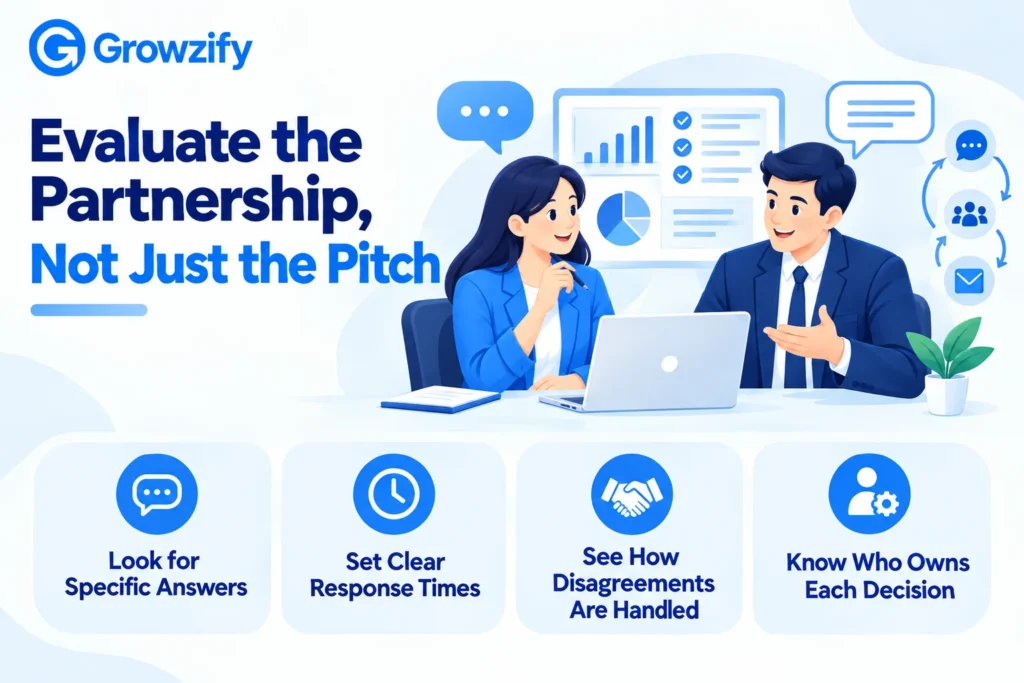
Check whether specific questions get specific answers or get redirected toward a general pitch. Check whether response-time expectations are stated clearly, and whether a delay gets acknowledged or simply happens without explanation.
Asking a provider to describe a recommendation a past client disagreed with, and what happened next, tends to reveal more about how they actually handle friction than asking how often you’ll meet.
Ask directly what the reporting cadence looks like, who the day-to-day account contact will be, what decisions that person can make directly, and how technical, strategic, or contractual issues get escalated when they need approval beyond that contact. Specific, documented answers here give you more to evaluate than a vague description of how the engagement will generally work.
A provider’s explanation of their own methods is only useful if it holds up against what Google actually documents.
Google’s own spam policiesdefine the specific practices that put a site at risk, including scaled content built primarily to manipulate rankings, link schemes, and cloaking among them. Before signing anything, it’s worth asking a provider directly whether their proposed approach would hold up against that documentation, and whether they can point to where their methods align with it.
Google’s own guidance goes a step further here, recommending that businesses evaluate an SEO’s recommendations against Google’s official documentation directly, rather than accepting a provider’s interpretation of what’s safe. A provider who welcomes that comparison is behaving differently than one who deflects it.
A short, specific set of questions does more work than a long generic checklist.
Ask what a typical first 30 days looks like for an account your size, and whether the provider can name the specific deliverables rather than giving a vague description of “getting started.”
Ask how they would handle a technical issue discovered mid-engagement and who owns fixing it. Clarify whether the provider implements changes directly, hands specifications to your development team, or stops at audit and recommendation only, since those are meaningfully different services even when the price looks similar.
Ask what access they actually need and why. The level of access should map to the work being performed rather than exceed it.
Ask who performs each major part of the work: the provider’s own employees, contractors, or another agency. Also confirm whether the team presented during the sales process is the same team that will execute the work.
Ask what happens if a specific account lead or specialist leaves partway through the engagement. Check whether campaign knowledge is documented and whether delivery depends too heavily on one individual.
Ask how the provider decides a deliverable is ready to reach you or go live. Review the QA process for content, technical changes, and links specifically. A documented review process is more useful than a general statement that “quality matters.”
Ask how reporting works and whether it connects activity to measurable outcomes or simply lists completed tasks. Request an example of the actual report or dashboard used for a real client, where confidentiality allows, rather than something created only for the sales process.
Confirm which data comes from Search Console, analytics, a rank tracker, or the provider’s own tools, so you understand how each metric is generated.
Finally, ask what happens if the relationship ends, including documentation handoff, access revocation, data return, and anything else that could affect continuity.
Price alone is not a reliable measure of whether an SEO provider is safe or effective.
A quote materially below comparable proposals is worth examining for what actually explains the difference: team seniority, delivery geography, automation, how much implementation responsibility sits with the client, or another real cost driver rather than an assumption about corners being cut.
A price well above the rest needs the same evidence-based scrutiny, not an assumption of higher quality. Compare proposals only after normalizing what each one actually includes: strategy, implementation, content, outreach, reporting, meetings, revisions, and any minimum commitment, since two quotes that look far apart may not actually be competing for the same scope of work.
It’s also worth weighing switching and exit costs alongside the monthly price, particularly where a provider controls the dashboards, reporting system, or campaign documentation, since a cheap monthly rate can still be expensive to leave.
‘The more useful question isn’t which proposal costs the least. It’s which proposal’s scope, method, and evidence actually justify its price, and whether the provider can explain that connection clearly when asked.
Access requests are one of the clearest, most concrete things to vet before signing anything.
Google’s own guidance is specific on this point: if Search Console access is needed for an audit, grant read access only at that stage, not write access.
The same least-privilege principle applies to every other system a provider might touch, GA4, the CMS, Google Business Profile, hosting, DNS, or a CRM, not only Search Console. Grant only the permissions the agreed work actually requires rather than letting access expand by default as the relationship continues.
A provider asking for broader account control than the current scope of work justifies is worth a direct question about why.
Before granting production access, it’s also reasonable to ask a few direct security questions. Confirm who specifically on the provider’s side will have access, whether named individual accounts and multi-factor authentication are used rather than a shared login, and how credentials are stored.
Also ask whether any subcontractors will receive client data or system access, and how access gets revoked when the engagement ends or a specific team member is no longer involved.
This matters even more once a provider is actually doing outsourced execution rather than a one-time audit. Growzify’s guide onwhat a good white label SEO contract should includeis written primarily for agencies structuring a reseller relationship.
Several underlying principles from it, including access boundaries, deliverable ownership, reporting responsibilities, and termination terms, can still help a business reviewing a direct SEO outsourcing agreement.
The following is an illustrative, composite scenario built from patterns Growzify sees helping businesses evaluate outsourced SEO providers, not a specific named client.
A mid-sized services company was close to signing with a provider that had pitched aggressive month-one ranking improvements for several competitive terms. Before signing, the company’s marketing lead asked for two direct references and requested a specific explanation of how the provider planned to achieve that timeline.
The references, when contacted directly, raised concerns about result stability and the provider’s overall methodology. Pressed for specifics, the provider described using high-volume paid link placements intended to pass ranking credit without qualifying them as sponsored, a method that conflicted directly with Google’s published spam policies regardless of whether it could be tied to any particular client’s later ranking movement.
The company didn’t sign, based on that method itself rather than an unproven causal story about what had happened to the references’ sites. It instead chose a provider that set realistic expectations, explained its methodology clearly, and used an approach consistent with Google’s published policies, a less dramatic pitch, but a relationship that didn’t carry the same policy risk to the site’s long-term standing in search.
Vetting helps determine whether the available evidence supports moving forward with a provider. It doesn’t replace the contract terms that define the actual relationship once a provider is selected. Vetting asks whether you should work with a provider at all; the contract asks under what enforceable conditions that relationship will actually operate.
Once a provider clears vetting, the next step is making sure the agreement itself protects the same things the vetting process was checking for: scope, access boundaries, ownership of deliverables, and what happens if the relationship doesn’t work out. That’s a distinct step from vetting, and worth treating as one.
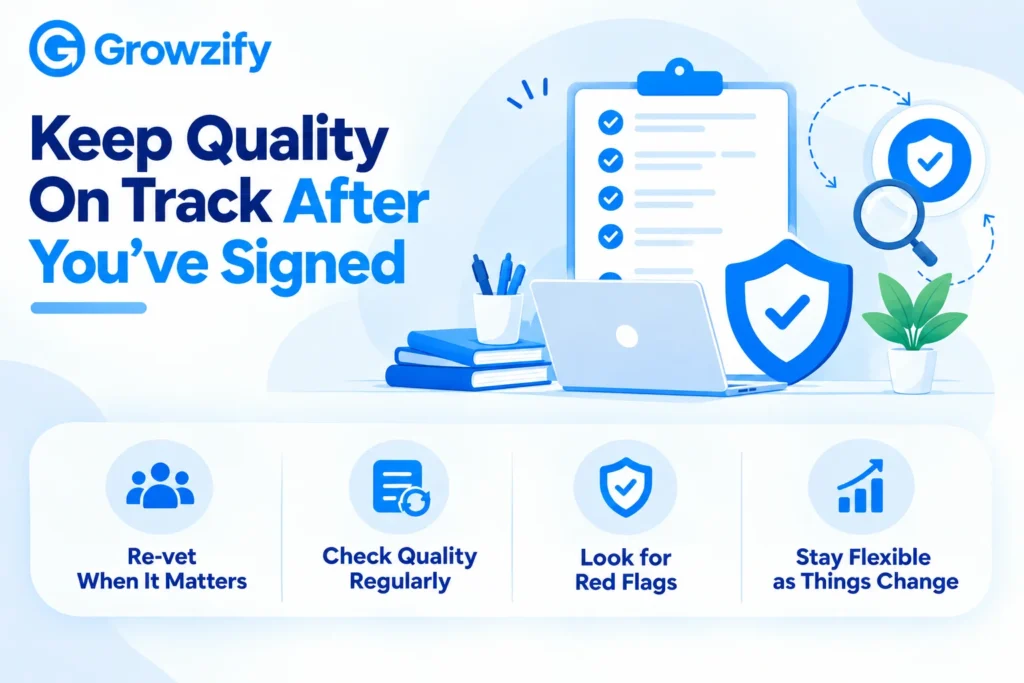
Vetting reduces upfront risk. It doesn’t guarantee consistent quality for the life of the engagement, since teams, methods, scope, and deliverables can all change over time. It’s worth re-vetting specifically when the delivery team changes materially, the provider introduces new subcontractors, its methodology shifts, pricing or scope changes significantly, unusual quality failures start appearing, or the engagement expands into higher-risk access or work, rather than waiting for a fixed calendar date to reconsider the relationship.
Periodic quality review, checking deliverables against the standard set during vetting, remains useful after signing for exactly that reason. Growzify’s guide on thewhite label SEO quality control checklistcovers what that ongoing review process should actually look like once work is underway.
Accepting testimonials instead of talking to references.A testimonial gives you a curated statement. A reference conversation gives you the chance to ask follow-up questions about deliverables, communication, problems, and outcomes. Provider-supplied references may still be selectively chosen, so use them as one part of the vetting process rather than standalone proof.
Skipping the methodology question because the results sound good.A strong-sounding outcome with no explanation of method is exactly the pattern worth slowing down on, not speeding past.
Granting full access before any work has actually started.If an audit requires Search Console access, grant read access only at that stage. Broader permissions should be granted only when the signed scope actually requires them, not ahead of it.
Treating a ranking or AI-visibility guarantee as confidence instead of a red flag.A guaranteed number-one ranking, or a guaranteed AI Overview appearance, is a red flag on its own terms, since Google’s own guidance states directly that no one can guarantee a specific ranking position, and the same logic extends to any generative-search feature nobody outside Google actually controls.
Assuming vetting ends once the contract is signed.Vetting shouldn’t be treated as a permanent certification. Re-evaluate the relationship when the provider’s team, methodology, scope, or deliverables materially change, rather than assuming an initial pass covers the life of the engagement.
| Area | Pass condition |
| Evidence | Comparable work can be substantiated, not just described |
| References | Direct conversations support the provider’s major claims |
| Methods | The provider can clearly explain how the work is actually done |
| Policy risk | Methods align with Google’s documented search and spam policies |
| AEO/GEO | Official guidance, provider testing, and vendor metrics are kept separate |
| Team | Who actually performs the work, and any subcontracting, is clear |
| Access | Requested permissions match the agreed scope, not more |
| QA | The provider has a documented review process before delivery |
| Reporting | Real client reporting can be inspected, not just a sales mockup |
| Communication | Account ownership and escalation are clearly defined |
| Scope and pricing | Proposals have been normalized to compare like for like |
| Continuity | Data, access, and documentation would remain usable if the provider changed |
How do you vet an SEO outsourcing provider?
Verify the provider’s claims against comparable work samples, direct reference conversations, a clearly explained methodology, current search-engine guidance, the actual team that will do the work, the access it’s requesting, its QA process, its real reporting, and its pricing and exit terms. A sales presentation alone isn’t sufficient evidence for any of that.
What are the biggest SEO provider red flags?
Guaranteed rankings or guaranteed AI visibility, secretive or unexplained methods, manipulative link acquisition, claims of Google-approved tools or privileged ranking data, access requests that exceed the agreed scope, unverifiable case studies, and an unwillingness to say clearly who will actually perform the work or how quality gets checked.
What’s the single most important thing to check before hiring an SEO outsourcing provider?
Whether the provider’s claims and methods can be cross-checked through work samples, reference conversations, documented processes, and relevant official Google guidance, rather than accepted solely from the sales pitch.
Is it a red flag if an SEO provider guarantees a specific ranking?
Yes. Google’s own documentation states directly that no one can guarantee a specific ranking, and treats that kind of guarantee as a warning sign rather than a sign of confidence.
How much access should a new SEO provider have before a contract is finalized?
At the audit stage, read-only access is generally sufficient, particularly for Search Console. Broader access should follow a signed, scoped agreement rather than come before one.
Should I be concerned if an SEO firm contacts me first?
It’s not automatically disqualifying, but Google’s own guidance specifically flags unsolicited outreach as a pattern worth extra scrutiny before proceeding.
Should the cheapest proposal be treated with more suspicion than a mid-priced one?
A significantly lower quote may reflect real differences in scope, staffing, delivery model, or automation rather than added risk on its own. Verify which factor actually explains the difference, after normalizing what each proposal actually includes, instead of assuming price alone indicates higher risk.
Is it reasonable to ask an SEO provider to explain how their methods align with Google’s own documentation?
Yes. Google’s own guidance specifically recommends evaluating an SEO’s recommendations against its official documentation, and a provider confident in its methods should be able to make that connection directly rather than treating the question as an inconvenience.
Vetting should happen before the business commits to the engagement or grants broader access than is necessary for evaluation, and it’s worth treating as seriously as the engagement itself.
If your organization is comparing outsourced SEO providers and wants a second opinion on the scope, methods, or risks in a proposal, Growzify’sSEO outsourcingteam can help review what you’re being offered. For agencies specifically weighing a white-label delivery partner rather than outsourcing client work directly, Growzify’swhite label SEO servicesteam can walk through the same vetting process from that side of the relationship.

At Growzify, we are dedicated to helping your business achieve its goals. Are you Ready to take the next step?

How to Manage SEO Outsourcing Across Multiple Teams A single-owner outsourcing model works fine until...
How to Find and Compare Local SEO Outsourcing Providers Finding a local SEO outsourcing provider...
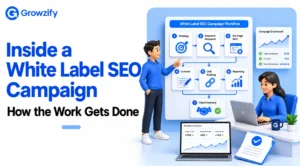
Inside a White Label SEO Campaign: How the Work Gets Done Clients see a single...

Multilingual SEO Best Practices: Optimize Your Multi-Language Website Translating a page and localizing it for...
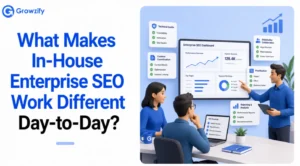
What Makes In-House Enterprise SEO Work Different Day-to-Day? On a small site, deciding to fix...

How Core Algorithm Updates Impact Large Sites Differently Than Small Ones A large enterprise site...
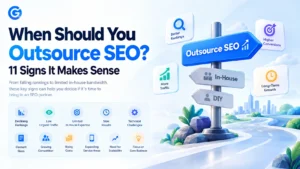
When Should You Outsource SEO? 11 Signs It Makes Sense Outsourcing SEO does not necessarily...
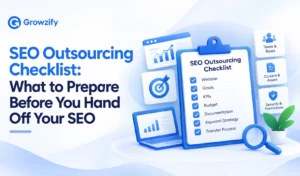
SEO Outsourcing Checklist: What to Prepare Before You Hand Off Your SEO SEO handoffs can...
Call Now






Growzify digital team is very effective, and easy to work with. Very strong communication and always up for suggestions. Saw 300% growth in web traffic 170% growth in revenue through Facebook ad’s & Amazon. I recommended them to my fellows and they turned their online business into a money making machine.