


White Label SEO Quality Control Checklist: How Agencies Ensure Consistent Delivery
This blog explains how agencies maintain consistent SEO performance using a structured white label SEO quality control checklist. It covers the processes, workflows, reporting standards, content reviews, link-building validation, technical SEO audits, and communication systems used to ensure reliable delivery across multiple client campaigns. The article also highlights how quality assurance helps agencies scale SEO services efficiently while maintaining transparency, accuracy, and long-term client trust.

Written byChitranshu Sharma
May 12, 2026
Quick Nav
White-label SEO services work well if you have an on-point execution plan, and a plan. A quality control checklist for white-label SEO services helps you out how to priortize tasks.
The white label SEO control checklist documented, systematic framework that agencies use to review every deliverable. It defines exactly what standards each deliverable must meet, including content, links, technical fixes, local SEO, and reports. And ensures those standards are applied consistently, regardless of who reviews the work. Where the white label quality checklist is applied
- QC checklists are applied to every deliverable, every month, not selectively or when something feels off
- The checklist covers all deliverable types: content, backlinks, technical SEO, local SEO, and client reports
- The agency is accountable to the client for everything delivered under its brand, and the QC process is what enforces that accountability
- A structured QC process catches errors before clients see them, protecting retention, reputation, and revenue
- Agencies using white-label SEO services through providers use QC checklists to maintain delivery standards that hold up under client scrutiny
A quality control checklist for white label SEO services is the structured review process an agency applies to every provider deliverable before client delivery.
Why White Label Quality Control Matters More for Agencies Realize
The white-label model creates a specific risk: the agency presents work it did not execute as its own. When that work is excellent, the agency earns full credit. When that work contains errors, the agency absorbs full blame, because the client has no visibility into the production chain.
White-label providers need to take extra care before they represent the results. These are manageable if caught before the client sees them. They become unmanageable when they reach the client unchecked.
Quality Control Checklist Framework for White Label SEO
A well-defined quality control checklist framework for white label SEO ensures every deliverable meets consistent standards before reaching the client. It acts as a structured layer between execution and delivery. Helping agencies maintain accuracy, reduce errors, and present work with confidence. While scaling operations efficiently across multiple clients and campaigns. white-label SEO covers five deliverable categories:
Content deliverables
Focus on blog posts, landing pages, and on-page optimization that align with search intent, keyword strategy, and readability standards.
Link building deliverables
This includes acquiring high-quality backlinks, ensuring relevance, authority, and natural anchor text distribution to strengthen domain credibility.
Technical SEO deliverables
cover site health improvements like crawlability, indexing, page speed, and structured data implementation.
Local SEO deliverables
involve optimizing Google Business Profile, citations, and location-based visibility to improve local search presence.
Reporting deliverables
present performance data, insights, and progress in a clear, branded format, helping clients understand results, strategy, and next steps effectively.
When implemented correctly, a quality control checklist framework transforms SEO delivery into a reliable and repeatable system. It protects client trust and strengthens operational consistency. Thus allowing agencies to scale without compromising quality, ensuring every report, content piece, and optimization reflects professionalism and measurable value across all campaigns.
Content Quality Control Checklist for White Label SEO Services
Content is typically the highest-volume deliverable in an SEO campaign and the most visible to clients. Content errors are the most likely to damage credibility, especially in industries where factual accuracy matters.
Pre-Review: Brief Alignment Check
Before evaluating the content itself, confirm that the content matches the brief.
- Target keyword matches the brief, primary keyword confirmed
- Secondary keywords from the brief are present in the content
- Content type matches the brief, blog article, landing page, product description, and FAQ page
- Word count meets or exceeds the brief specification, not 20% short
- Topic and angle match what was briefed, not a related but different topic
- Client business name, service names, and terminology are used correctly throughout
On-Page SEO Check
- Title tag is written and falls within the 50–60 character limit
- Title tag includes the primary keyword, naturally, not forced
- Meta description is written and falls within the 150–160 character limit
- Meta description includes the primary keyword and a clear value proposition
- H1 matches or closely reflects the title tag, primary keyword is present
- H2 headings are used to structure the content logically, and secondary keywords are used where natural
- H3 headings used where appropriate, no heading hierarchy skipped (H1 → H3 without H2)
- Primary keyword appears in the first 100 words of the content
- Keyword density is natural, no keyword stuffing, no unnatural repetition
- URL slug is short, keyword-inclusive, and formatted correctly (hyphens, no underscores)
Content Quality Check
- Content is factually accurate for the client’s industry, verified, not assumed
- No generic filler phrases that add length without adding value
- No unsupported claims or exaggerated statements that could embarrass the client
- Content addresses the search intent behind the target keyword, informational, commercial, or transactional
- Content is unique, not duplicated from elsewhere on the client’s site or from external sources
- Reading level is appropriate for the client’s target audience
- Brand voice matches the client’s established tone, formal, conversational, technical, and accessible
- No AI-generated tells, repetitive sentence structures, hollow transitions, or generic conclusions
- No references to competitors by name unless strategically approved
- No legal or compliance issues, especially for YMYL industries (healthcare, legal, financial, medical)
Internal Linking Check
- Minimum two internal links included, pointing to relevant pages on the client’s site
- Internal link anchor text is descriptive and keyword-relevant, not generic (“click here,” “read more”)
- Internal links point to live, correct URLs, no 404s, no redirects
- No internal links pointing to the page itself (self-referential links)
E-E-A-T Check (For YMYL and Authority-Sensitive Content)
- Content demonstrates subject matter expertise, accurate terminology, and correct industry context
- Author attribution is present where required, with credentials appropriate to the topic
- External citations or references are included where factual claims require support
- No content that implies professional advice without appropriate disclaimers (legal, medical, financial)
Link Building Quality Control Checklist
Links are permanent additions to the client’s backlink profile. A bad link is not just a wasted deliverable; it is a potential liability that requires disavowal work to address. QC on links must be thorough and non-negotiable.
Link Verification Check
- Every link claimed as delivered is confirmed live, manually verified, not assumed
- Link points to the correct target URL, the page specified in the brief, not the homepage
- Link is indexed or indexable, not on a noindexed page
- Link is a dofollow link, or if nofollow, this was agreed in the brief
- Link is in the body content of the article, not in the footer, sidebar, or author bio, unless approved
Linking Domain Quality Check
- Domain has genuine organic traffic, verified via Ahrefs or Semrush traffic estimate
- Domain has no history of penalties, check for manual actions or algorithmic demotion
- Domain is relevant to the client’s industry or topic, not a completely unrelated niche
- Domain does not appear to be a private blog network (PBN) site, no thin content, no unnatural link patterns in its own backlink profile
- Domain is not part of a link farm, multiple unrelated sponsored posts, excessive exact-match anchor text patterns
- Domain rating or domain authority meets the minimum threshold agreed in the brief
- Domain is not a direct competitor of the client
Anchor Text Check
- Anchor text matches the agreed anchor text from the brief
- Anchor text is natural within the sentence, not awkwardly forced
- Anchor text does not over-optimize for exact-match keywords, especially for clients with existing link profiles under scrutiny
- Anchor text distribution across all acquired links is checked against the overall strategy, not all exact-match, not all branded
Article Quality Check (For Guest Post Links)
- The article hosting the link is substantive, not thin content written purely as a link vehicle
- The article is relevant to the linked page’s topic, and contextual relevance is confirmed
- No other client links appear in the same article, no link co-citation with competitor sites
- The article does not appear to be part of a paid link scheme that is visibly apparent
Link Log Update
- New link logged in the master link tracking document, domain, target URL, anchor text, DR, date placed
- Running link total updated
- Domain added to “used domains” list, to prevent duplicate link placement from the same domain
Site Speed and Core Web Vitals Check
- PageSpeed Insights runs post-implementation, and scores are recorded for comparison
- Core Web Vitals status confirmed, LCP, INP, CLS scores vs. previous month
- Image optimization confirmed, compressed, correct format (WebP where supported)
- Render-blocking resources addressed if that was in scope
- No regression, site speed has not decreased following other technical changes
Structured Data Check
- Schema markup validated through Google’s Rich Results Test, no errors
- Schema type is correct for the page, LocalBusiness on location pages, Product on product pages, Article on blog posts
- Required schema properties are populated, no empty or placeholder fields
- The schema does not contradict visible page content, prices, hours, and addresses match
- The new schema does not conflict with the existing schema already on the page
Post-Implementation Verification
- All technical fixes marked as completed have been verified as live, not just marked done in the project management tool
- GSC data monitored in the days following implementation, no unexpected coverage drops or crawl errors
- Crawl run with Screaming Frog or equivalent to confirm changes, not relying solely on provider confirmation
Google Business Profile Check
- Primary category is correct for the business type, not a generic category
- Secondary categories are populated and relevant
- Business description is complete, keyword-inclusive, and within character limits
- The Services or products section is fully populated
- Operating hours are correct, including special hours for holidays
- Photos are uploaded: interior, exterior, team, and product photos, where applicable
- GBP posts published, confirmed live with correct content and links
- Q&A section populated with high-intent questions and accurate answers
- No duplicate GBP listings created, checked via Google Maps search
- Profile is not suspended or under review, status confirmed
Review Management Check
- All new reviews from the past month have a response, positive and negative
- Review responses are professional, brand-appropriate, and do not include personal information
- Negative reviews are addressed constructively, not defensively
- Review velocity is tracked, and new reviews this month are logged by location
- No review gating or incentivized review practices that violate Google’s policies
Reporting Quality Control Checklist
The monthly report is the client’s primary view of campaign performance. Data errors, missing context, or visible third-party branding in the report cause immediate credibility damage.
Branding Check
- The agency logo is present on every page, in the correct version and correct placement
- Agency brand colors are applied consistently throughout
- No white-label provider name, logo, or branding appears anywhere in the document
- No third-party tool watermarks visible, Semrush, Ahrefs, Moz logos removed or cropped from screenshots
- Report header and footer carry only agency information
- PDF filename is professional, “ClientName-SEO-Report-April2026.pdf” not “semrush_report_export.pdf.”
Data Accuracy Check
- Organic traffic data matches what is visible in the client’s Google Analytics 4 account
- Keyword ranking data is current, pulled within the last 48–72 hours, not from three weeks ago
- Backlink data matches the master link tracking log; no links claimed that were not delivered
- GBP insights data matches what is visible in the client’s GBP dashboard
- Date ranges are correct, report period matches the stated reporting period
- No data from a different client’s account has been accidentally included; cross-client data contamination check
- Year-over-year or period comparisons use the correct comparison dates
Content and Narrative Check
- The executive summary is written, not left blank or filled with placeholder text
- All significant metric movements, positive and negative, are explained in context
- No unexplained anomalies in the data; every unusual number has a note
- Algorithm update impacts are acknowledged if a confirmed update ran during the period
- Work completed section is a specific, itemized list of deliverables, not vague category descriptions
- Plan for next month section is present, specific deliverables, not generic commitments
- No jargon left unexplained for non-technical clients
Formatting and Presentation Check
- All charts and graphs are readable, with correct scale, labeled axes, and legend where needed
- Tables are formatted consistently throughout the document
- No broken image placeholders or missing chart data
- Page numbering is correct if included
- The report is the correct length for the client’s tier, not a 40-page report for a $500/month client
- PDF export is clean, no formatting breaks, cut-off tables, or misaligned elements
Delivery Check
- The report is delivered on the date agreed at kickoff, not late without communication
- Delivery email includes a brief, personalized summary, not just “please find the report attached.”
- Client call is scheduled to walk through the report, calendar invite confirmed
- The report is saved in the client’s folder in the agency’s file system, accessible for future reference
The QC Review Process: Who Does What
A checklist without a defined review process is a document that collects dust. The QC process requires assigned roles.
Role 1: Primary reviewer (account manager or SEO lead)
The account manager closest to the client reviews all deliverables against the checklist. They have the context to identify brief misalignment, tone issues, and client-specific concerns.
Role 2: Secondary reviewer (senior SEO or agency QC lead)
A second set of eyes on reports, link placements, and any technical changes. The secondary reviewer catches errors the primary reviewer misses, and provides a check against individual blind spots.
Role 3: Client delivery approver (account director or agency owner)
For new clients in the first three months, or for high-value accounts, a final approval before delivery. Less necessary for established clients with stable delivery rhythms.
The two-reviewer rule:No deliverable should be reviewed and approved by the same person who received it from the provider. The minimum standard is two reviewers, one who checks against the brief, one who checks against client standards.
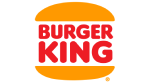
Embed the checklist in the project management system
Every deliverable that requires QC review should have a task in ClickUp, Asana, or Monday.com with the checklist items as subtasks. The reviewer checks off each item, creating a documented audit trail, not just a verbal confirmation.
Set QC review as a workflow stage, not an afterthought
The production calendar should include QC review time as a scheduled stage between “provider delivers” and “client receives.” If the calendar has no time allocated for QC, QC will be skipped when the schedule is tight, which is exactly when it is most needed.
Track QC metrics over time
How often do deliverables fail QC in each category? Which checklist items fail most frequently? Which clients require the most revisions? This data identifies whether the problem is in the brief (agency issue), the provider (execution issue), or the checklist (standards issue).
Update the checklist regularly
Google’s guidelines evolve. Link-building best practices shift. Reporting standards change. The QC checklist should be reviewed quarterly and updated to reflect current standards, not left static from the day it was created.
Why Agencies Choose Consistent White Label SEO Providers
Agencies choose quality-consistentwhite label SEO providersbecause reliable output makes quality control efficient. When deliverables meet clear standards, teams spend less time fixing errors and more time refining strategy.
White-label SEO providers likeGrowzify Digitalalign execution with agency quality control checklists and expectations. Thus ensuring accurate content, clean links, verified technical work, and client-ready reports. This consistency reduces revisions and builds trust. Ultimately, a dependable white label partner turns QC into a refinement step, not a correction process, enabling smoother scaling and stronger client results.
Agencies usingwhite-label SEO serviceswith the support Growzify Digital report that their quality checklist review process focuses on narrative and client-specific refinement. Rather than correcting fundamental brief misalignments or data inaccuracies.
Growzify Digital builds internal execution standards that reduce agency QC burden, delivering against documented briefs, verifying technical implementations, and maintaining link quality standards that hold up to rigorous agency review.
FAQs
What is quality control in white-label SEO?
Quality control in white-label SEO is the systematic process an agency uses to review every deliverable from a white-label provider, including content, links, technical fixes, local SEO, and reports, before it reaches the client.
Why do agencies need a QC checklist for white-label SEO?
As the agency is fully accountable to the client for everything delivered under its brand, regardless of who produced it. A QC checklist ensures errors are caught internally before they reach the client. Agencies that skip QC absorb the full reputational and retention risk of provider errors.
What should a white-label SEO content QC checklist include?
Brief alignment verification, on-page SEO elements (title tag, meta description, H1, keyword placement), content accuracy, and factual correctness. It also includes internal linking, brand voice match, E-E-A-T compliance for YMYL content, image optimization, and a final check for spelling, grammar, and placeholder text.
How do agencies QC white-label link building?
By verifying every claimed link is live, points to the correct target URL, uses the agreed anchor text, and is placed in body content on a relevant, substantive page, not in a footer or sidebar. Every link is also logged in a master tracking document.
What is the two-reviewer rule in SEO QC?
The principle that no deliverable should be reviewed and approved by the same person who received it from the provider. At a minimum, two reviewers are required, one who checks against the brief and one who checks against client standards. This prevents individual blind spots from allowing errors through to the client.

Chitranshu SharmaA growth strategist, digital marketing consultant, and the founder of Growzify, a performance-driven agency helping brands dominate search, shape perception, and build sustainable online visibility. With 8+ years of hands-on experience in Enterprise SEO, Online Reputation Management (ORM), and AI-led traffic generation, Chitranshu has helped startups, public figures, SaaS companies, and cannabis brands outrank competitors — ethically and at scale.
Explore More Articles
SEO Outsourcing Checklist: What to Prepare Before You Hand Off Your SEO
SEO Outsourcing Checklist: What to Prepare Before You Hand Off Your SEO SEO handoffs can...
September 26, 2026Outsourcing
How to Manage Outsourced SEO for Long-Term Results
How to Manage Outsourced SEO for Long-Term Results Focus on building a structured partnership with...
September 25, 2026Outsourcing
Enterprise SEO Metrics: The KPIs That Actually Move Revenue
Enterprise SEO Metrics: The KPIs That Actually Move Revenue Enterprise SEO success depends on measuring...
September 14, 2026Enterprise
Managing Redirect Chains and Canonical Tags at Enterprise Scale
Managing Redirect Chains and Canonical Tags at Enterprise Scale A single redirect rule written five...
September 4, 2026Enterprise
How to Build a Technical SEO Monitoring Stack for Large Websites
How to Build a Technical SEO Monitoring Stack for Large Websites A technical SEO regression...
September 2, 2026Enterprise

Identifying and Fixing Thin Content Pages on Large Websites
Identifying and Fixing Thin Content Pages on Large Websites A page can be 2,000 words...
September 2, 2026Enterprise
How to Deploy and Maintain Structured Data and Rich Snippets Across a Website with Thousands of Pages
How to Deploy and Maintain Structured Data and Rich Snippets Across a Website with Thousands...
September 1, 2026Enterprise