

The Best AI SEO Tools for Content Teams in 2026
The right AI SEO tools help content teams streamline research, optimize content, improve search performance, and build scalable workflows that support higher rankings, AI visibility, and sustainable organic growth.

Written byChitranshu Sharma
July 1, 2026
Quick Nav
The best AI SEO tools for content teams in 2026 fall into four categories that work together rather than one tool that does everything: all-in-one platforms like Semrush and Ahrefs for keyword research and technical audits, content optimization tools like Surfer SEO and Clearscope for on-page structure, budget-friendly suites like SE Ranking for smaller teams, and a newer category of AI-visibility tools that track citation frequency across ChatGPT, Gemini, and Perplexity, a capability most teams don't have wired into their stack yet. 68% of digital marketers have already adopted at least one AI-based SEO tool.
The AI SEO tools market is genuinely large and growing fast. At the time of writing,Business Research Insightsestimates the market at roughly $2.43 billion in 2026, projected to reach nearly $6 billion within a decade, a 10.5% compound annual growth rate. That growth is real, but it also means the category is crowded with overlapping products. The honest job of a “best tools” list isn’t to name the most tools; it’s to map which category actually solves which problem, so a content team doesn’t end up paying for three subscriptions that do the same thing.
The Four Categories That Actually Matter
Category | What It Solves | Example Tools |
All-in-one SEO platforms | Keyword research, rank tracking, backlink analysis, site audits | Semrush, Ahrefs |
Content optimization | On-page structure, semantic coverage, content scoring against competitors | Surfer SEO, Clearscope |
Budget-friendly suites | Core SEO features at a lower price point for smaller teams | SE Ranking |
AI-visibility tracking | Citation frequency and brand mentions across ChatGPT, Gemini, Perplexity, and AI Overviews | SE Ranking, Rankscale, AIclicks |
Most teams already own a tool in the first category and stop there.Semrush’s own 2026 tool roundupand most others like it focus almost entirely on the first two categories. The fourth category is the one almost nobody has in place yet, and it’s the one that answers a question every other tool in the stack can’t: are we actually showing up when someone asks an AI assistant about our category?
Why This Market Is Growing So Fast
- 68% of digital marketershave already adopted AI-based SEO tools to improve content strategy, keyword targeting, and overall site performance.
- Roughly 70% of new deployments are cloud-based, and about 42% of AI SEO tools now incorporate natural language processing and predictive analytics, perDemand Sage’s research.
- North America accounts for roughly 40-42% of the global market, perBusiness Research Insights, the largest single regional share and the most competitive market for tool vendors.
- 46% of small and medium-sized businesses cite high subscription and implementation costs as the main barrier to adoption, per the sameBusiness Research Insightsreport, which is exactly why the budget-tier category exists and matters.
How We Evaluated These Tools
This list isn’t ranked by popularity or affiliate availability. Each tool was assessed against four criteria that actually predict whether it solves a real problem for a content team: breadth of core feature coverage (research, tracking, optimization, or AI-visibility), pricing relative to team size, whether the tool does one thing well versus many things adequately, and whether it covers the AI-visibility layer at all, since that’s the gap most existing “best tools” lists still miss entirely.
Pricing at a Glance
Tool | Starting Price Range | Pricing Model |
Semrush | Mid-tier monthly subscription | Tiered by feature access and usage limits |
Ahrefs | Mid-to-high-tier monthly subscription | Tiered by feature access and usage limits |
Surfer SEO | Mid-tier monthly subscription | Tiered by number of content audits/articles per month |
Clearscope | Premium relative to Surfer SEO | Tiered by number of content reports per month |
SE Ranking | Lower-tier monthly subscription | Tiered by number of keywords and sites tracked |
Rankscale | Around $20/month starting | Tiered by number of prompts tracked, no per-engine add-ons |
AIclicks | Starting around $59/month | Tiered by number of prompts and AI platforms tracked |
Exact pricing changes often enough in this category that we’re deliberately not quoting fixed dollar figures for every tool here; check each vendor’s current pricing page before budgeting, particularly for the AI-visibility tools, which are the newest and most actively repricing category in this list.
Best AI SEO Tools by Use Case
Tool | Best For | Why It Matters |
Semrush | All-in-one SEO research and competitive analysis | Strong for keyword research, competitor tracking, technical audits, and content planning in one platform |
Ahrefs | Backlink analysis and content opportunity research | Useful for authority gaps, competitor content analysis, and link-driven ranking opportunities |
Surfer SEO | On-page content optimization | Compares drafts against top-ranking pages to improve structure and semantic coverage |
Clearscope | Editorial content quality and topic coverage | Cleaner content briefs and quality-focused optimization without an overcomplicated workflow |
SE Ranking | Budget-friendly SEO suite | Rankings, audits, keyword tracking, and reporting without enterprise-level pricing |
Rankscale | AI visibility and brand mention tracking | Tracks brand mentions across 17+ AI platforms including ChatGPT, Gemini, and AI Overviews |
AIclicks | AI traffic and citation visibility | Tracks 10+ AI platforms daily and connects visibility data to actual Google Analytics traffic |
The mistake is not choosing the “wrong” tool. The mistake is buying tools for the same job while leaving an entire visibility layer untracked.
Tool Profiles: What Each One Actually Does
Semrush
Semrushis the closest thing this category has to an industry default, and for good reason: it bundles keyword research, rank tracking, backlink analysis, technical site audits, and content planning into one platform rather than requiring a separate subscription for each function. That breadth is exactly why it works best for teams that want one central system rather than assembling five point solutions.
The tradeoff is depth in any single area. Specialist tools sometimes out-perform Semrush’s version of the same feature, backlink data accuracy is the most commonly cited example, where Ahrefs is generally considered stronger. For most growing content teams, the convenience of one platform outweighs that gap.
Ahrefs
Ahrefsbuilt its reputation on backlink data accuracy and deep keyword research, and that reputation still holds. Its Content Gap and Site Explorer tools are particularly strong for the competitive research workflow covered earlier in this series: finding what’s already working for competitors before producing anything new.
Where Ahrefs is weaker than Semrush is breadth of adjacent marketing features, social tracking, PPC research, and similar extras that some all-in-one buyers expect. Teams whose core need is genuinely backlink and content-gap research, not a full marketing suite, tend to prefer it specifically for that focus.
Surfer SEO
Surfer SEOfocuses narrowly on on-page optimization: it analyzes top-ranking pages for a target keyword and scores a draft against that competitive set for structure, word count, and semantic term coverage. It’s a writing-time tool, used while a page is being drafted, not a research or tracking platform.
This makes it a strong second tool alongside an all-in-one platform, but a poor substitute for one. Surfer can’t do keyword research or rank tracking on its own; it answers a narrower, specific question well: does this draft look structurally competitive against what’s already ranking.
Clearscope
Clearscopesolves a similar problem to Surfer SEO, content scoring and brief generation, with a cleaner, more editorially-focused interface. Content and editorial teams who find Surfer’s interface dense often prefer Clearscope specifically for that reason, even though the underlying function, score a draft, generate a brief, is comparable.
It’s priced at a premium relative to Surfer, which matters most for smaller teams comparing the two on cost rather than workflow preference.
SE Ranking
SE Rankingcovers the same core functions as Semrush and Ahrefs, rank tracking, audits, keyword research, at a meaningfully lower price point, making it the practical choice for smaller teams or solo operators who need the fundamentals without enterprise pricing. At the time of writing, it’s also one of the few all-in-one platforms that has started building basic AI-visibility tracking directly into its core product rather than treating it as a separate purchase.
That AI-visibility feature makes SE Ranking useful as a bridge between traditional SEO tracking and dedicated AI-visibility tools, but it’s not a full substitute for one. Dedicated platforms like Rankscale and AIclicks go considerably deeper on cross-platform AI citation tracking than a bundled feature inside a broader suite.
Rankscale
Rankscaleis purpose-built for the AI-visibility category covered throughout this guide. At the time of writing, it tracks brand mentions and citations across 17+ AI platforms, including ChatGPT, Perplexity, Gemini, Google AI Mode, and Google AI Overviews, by recreating real prompts and recording what each engine actually returns. Pricing starts around $20/month with no per-engine add-ons, making it one of the more accessible entry points into this newer category, though it’s worth confirming current pricing directly on Rankscale’s site before budgeting, since this category reprices often.
AIclicks
AIclickssolves the same core problem as Rankscale, tracking citation and visibility across AI platforms, with a stronger emphasis on connecting that visibility data to actual measured traffic through Google Analytics, plus a built-in recommendations layer that turns visibility gaps into a prioritized action list. At the time of writing, it tracks 10+ AI platforms with daily updates, starting around $59/month, reflecting the added action-and-traffic-tracking layer on top of pure visibility monitoring. As with Rankscale, confirm current pricing directly before budgeting.
Recommended AI SEO Tool Stacks
Team Type | Recommended Stack | Why |
Small business | SE Ranking + one content optimization tool | Covers core SEO tracking and on-page improvement without overbuying |
Startup content team | Ahrefs or Semrush + Surfer SEO | Builds early topical authority, finds content gaps, structures pages faster |
Agency | Semrush + SE Ranking + an AI-visibility tracker | Supports reporting, client audits, competitive analysis, and AI citation tracking across accounts |
Enterprise team | Semrush or Ahrefs + Clearscope + a technical SEO crawler + AI-visibility tracking | Large sites need research, editorial control, technical monitoring, and AI citation visibility working together |
AI SEO-focused team | Semrush/Ahrefs + Surfer/Clearscope + Rankscale/AIclicks | Combines classic SEO data, content optimization, and AI search visibility in one stack |
What Not to Buy
Don’t buy a tool just because it has “AI” in the name. Many SEO platforms now use AI for summaries, briefs, content scoring, or keyword clustering, but that doesn’t mean they solve AI search visibility specifically.
Avoid buying:
- A second keyword research tool when your current one already covers the same data.
- A content scoring tool if your real problem is weak strategy or missing subject-matter expertise, no score fixes a piece that has nothing new to say.
- An AI writer if your actual bottleneck is editing, originality, or legal and industry accuracy, the same standard covered in our piece on humanizing AI-assisted content.
- An enterprise suite if your team only publishes a few pages a month. The cost barrier 46% of SMEs cite usually traces back to exactly this mismatch.
- An AI-visibility tracker before you have enough content or brand demand to actually generate measurable AI citations to track.
A good tool stack should remove blind spots, not create more dashboards.
The Category Most Stacks Are Missing: AI-Visibility Tracking
Every tool in the first three categories above was built for a search landscape where ranking position was the only thing that mattered. None of them natively show whether your brand gets mentioned when someone asks ChatGPT, Gemini, or Perplexity a question your content answers, and Google’s AI Overviews don’t show up in a standard rank tracker either.
This gap matters more than most content teams currently treat it. As covered in our broader look at how Google AI Overviews changed SEO, citation, not just ranking, increasingly determines who captures the traffic that remains on a given query. A tool stack with no visibility into that layer is flying blind on a channel that’s already routing real traffic.
If your current stack only reports rankings and traffic, that’s the single highest-value gap to close before adding another keyword research tool you probably don’t need.
Common Mistakes When Building an AI SEO Tool Stack
- Buying redundant tools across the same categorybecause each one was recommended by a different blog post, rather than mapping what’s actually missing first.
- Choosing the most feature-rich platform regardless of team size, then using a fraction of what’s paid for. The 46% of SMEs citing cost as a barrier are often paying for enterprise tiers they don’t need.
- Ignoring AI-visibility tracking entirelybecause it’s a newer, less familiar category, while competitors who’ve already added it can see a real channel the rest of the stack can’t.
- Treating tool output as a finished strategy.A content-scoring tool can tell you a page is “optimized” by its own metric and still produce content that adds nothing new to a crowded SERP. Tools accelerate execution; they don’t replace judgment about what’s actually worth publishing.
Frequently Asked Questions
Do I need an all-in-one platform and a content optimization tool, or just one?
Most growing teams need both, since they solve different problems: an all-in-one platform handles research, tracking, and technical audits, while a content optimization tool focuses specifically on structuring individual pages. Very small teams publishing infrequently can often start with just one and add the other later.
Is AI-visibility tracking worth paying for if my site is small?
It depends on how much of your traffic comes from informational queries likely to trigger an AI Overview or get answered inside a chatbot. Small, mostly transactional sites can usually wait. Sites built around informational content, the kind of content most exposed to AI Overviews, benefit from this category sooner.
Will an AI SEO tool guarantee better rankings or more AI citations?
No. Every tool in this list helps you research, track, or execute more efficiently. None of them control Google’s algorithm or an AI model’s citation selection, and no vendor can honestly promise a specific ranking or citation outcome.
How often should a tool stack be reevaluated?
Annually at minimum, given how fast this market is moving, 10%+ compound annual growth and an entire new tool category, AI-visibility tracking, that didn’t meaningfully exist a few years ago. A stack that was right last year may already have a gap.
How much should a content team budget monthly for SEO tools?
It depends entirely on team size and content volume, not a fixed rule. A solo operator can often run effectively on a single budget-tier subscription. A growing in-house team typically needs an all-in-one platform plus one content optimization tool, two subscriptions, not five. The mistake to avoid is sizing the budget to the most expensive plan a vendor offers rather than to the team’s actual publishing volume.
Is there a single tool that covers everything, including AI visibility?
Not yet, fully. Some all-in-one platforms, SE Ranking in particular, have begun building basic AI-visibility features directly into their core product, but the dedicated AI-visibility tools currently track more AI platforms in more depth than any all-in-one platform’s built-in version. Most teams serious about this layer are still running a dedicated tool alongside their main platform rather than relying on one vendor for both.
Where Tools Fit Into a Bigger AI SEO Strategy
We touched on which tools fit which growth stage inStartup SEO Basics: Build Visibility From Day One, which covers the earlier end of this same decision. Tools are the execution layer, not the strategy itself: a content optimization tool can tell you a page is structured well, but it can’t decide which topics are worth covering, how they should interlink as a cluster, or whether a draft has actually been humanized into something worth ranking.
That judgment layer is where Growzify’son-page SEOwork operates, applying the same tools covered above with the editorial and strategic decisions they can’t make on their own. For teams managing this across a large site, a structuredenterprise SEO programcombines the right tool stack, including AI-visibility tracking, with the strategy and execution to actually use what those tools surface.
This piece closes out our broader AI SEO series, which also covers how Google AI Overviews changed search, how to actually rank inside an AI Overview, how to refresh old content to win citations back, how to humanize AI-assisted drafts so they earn citation rather than detection flags, and how topic clusters compound AI visibility across an entire site. Tools execute the tactics in those pieces faster; they don’t replace the strategy behind them.

Chitranshu SharmaA growth strategist, digital marketing consultant, and the founder of Growzify, a performance-driven agency helping brands dominate search, shape perception, and build sustainable online visibility. With 8+ years of hands-on experience in Enterprise SEO, Online Reputation Management (ORM), and AI-led traffic generation, Chitranshu has helped startups, public figures, SaaS companies, and cannabis brands outrank competitors — ethically and at scale.
Explore More Articles
How to Find and Compare Local SEO Outsourcing Providers
How to Find and Compare Local SEO Outsourcing Providers Finding a local SEO outsourcing provider...
October 13, 2026Outsourcing
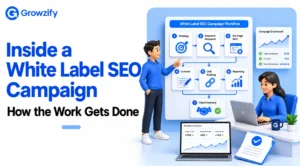
Inside a White Label SEO Campaign: How the Work Gets Done
Inside a White Label SEO Campaign: How the Work Gets Done Clients see a single...
October 13, 2026White Label

How to Vet an SEO Outsourcing Provider Before You Sign a Contract
How to Vet an SEO Outsourcing Provider Before You Sign a Contract A polished proposal...
October 9, 2026Outsourcing
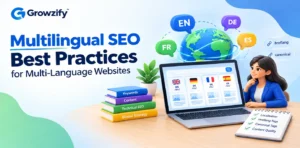
Multilingual SEO Best Practices: Optimize Your Multi-Language Website
Multilingual SEO Best Practices: Optimize Your Multi-Language Website Translating a page and localizing it for...
October 7, 2026SEO
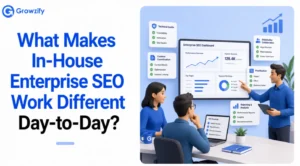
What Makes In-House Enterprise SEO Work Different Day-to-Day?
What Makes In-House Enterprise SEO Work Different Day-to-Day? On a small site, deciding to fix...
October 7, 2026Enterprise
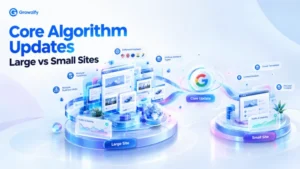
How Core Algorithm Updates Impact Large Sites Differently Than Small Ones
How Core Algorithm Updates Impact Large Sites Differently Than Small Ones A large enterprise site...
October 7, 2026Enterprise
When Should You Outsource SEO? 11 Signs It Makes Sense
When Should You Outsource SEO? 11 Signs It Makes Sense Outsourcing SEO does not necessarily...
September 26, 2026Outsourcing