



How to Create AI-Recommended Legal Content With Semantic SEO
Semantic SEO helps law firms create authoritative legal content that aligns with user intent, strengthens topical authority, and increases visibility across AI-powered and traditional search results.

Written byChitranshu Sharma
June 29, 2026
Quick Nav
Think about how you search for legal advice today. You probably ask a complete question instead of typing a few keywords. That's exactly how AI search works. To create AI-recommended legal content, focus on answering real client questions with clear, conversational language. Cover related legal topics in depth; use logical headings; add structured data where appropriate; and keep your content accurate, trustworthy, and updated. The better you answer your clients' questions, the more likely AI and search engines are to recommend your content.
If you’ve searched for legal advice recently, you’ve probably noticed that search results look very different from those they did a few years ago. Instead of showing only a list of websites, Google AI Overviews, ChatGPT, Gemini, and other AI-powered search platforms now summarize information and recommend sources they consider accurate and trustworthy.
This shift is changing how potential clients discover law firms. People are no longer searching with just a few keywords like“personal injury lawyer.”Instead, they ask complete questions such as“What should I do after a car accident?”,“How much compensation can I claim?”, AI then searches for content that provides the most complete, reliable, and relevant answer.
For law firms, this means traditional keyword optimization alone is no longer enough. The goal is to rank on Google’s first page and to create content that AI platforms recognize as authoritative and recommend directly within their answers. In other words, you want your firm’s expertise to become part of the conversation before a potential client even clicks on a website.
This is whereSemantic SEObecomes essential. Rather than focusing on a single keyword, Semantic SEO helps you build content around an entire legal topic and the questions people naturally ask.
By connecting these related topics and answering real client questions, search engines and AI systems gain a much deeper understanding of your expertise. This increases the likelihood of your content appearing not only in traditional search results but also in AI-generated recommendations and summaries.
Let’s explore how Semantic SEO works, why AI recommends certain legal websites over others, and discover the practical strategies your law firm can use to build content that earns greater visibility, trust, and long-term rankings across both search engines and AI-powered search experiences.
What Is Semantic SEO?
Semantic SEO is the process of creating content that covers an entire topic and focuses on the relevant words. Instead of writing an article solely for the phrase “personal injury lawyer,” semantic SEO expands the discussion to include everything users are interested in, such as statute of limitations, insurance claims, evidence collection, comparative negligence, court procedures, and local legal requirements.
The goal is to help search engines and AI understand the intent behind a user’s search, not just recognize keywords. By providing clear, relevant, and comprehensive answers, your content demonstrates expertise, satisfies user intent, and is more likely to be recommended in both traditional search results and AI-generated responses.
Why Semantic SEO Matters for Law Firms
Years ago, ranking for a keyword likepersonal injury lawyermainly meant repeating that phrase throughout a page. Today, search engines and AI understand context rather than just keywords. For example, someone searching:
- “What should I do after a car accident?”
- “How long do I have to file a personal injury claim?”
- “Can I negotiate with the insurance company myself?”
is often looking for the same legal service. Semantic SEO helps connect these related questions so search engines understand that your website covers the entire topic, not just one keyword. The more complete your content is, the more likely AI platforms are to recommend it.
How to Make Legal Content AI-Friendly with Semantic SEO
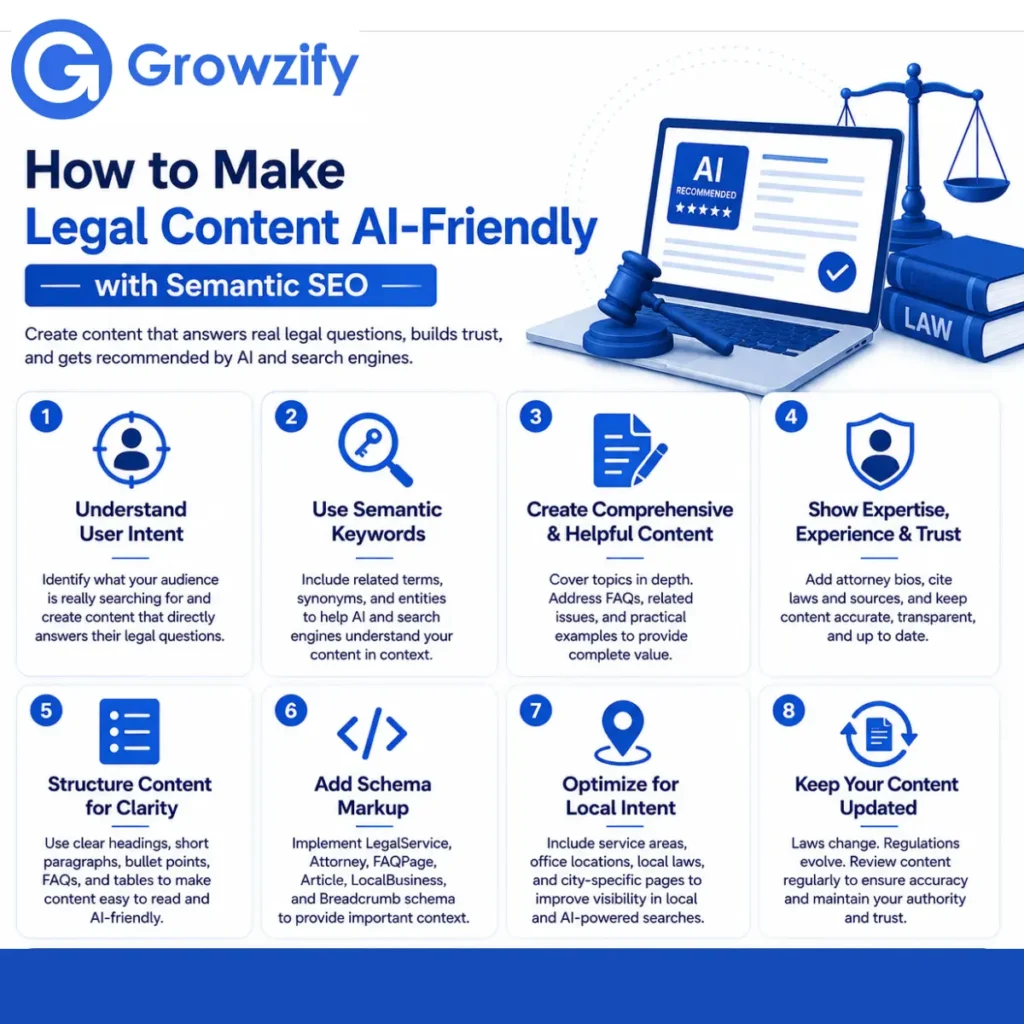
Creating AI-friendly legal content with Semantic SEO means writing for people first, while helping search engines and AI understand your expertise. Instead of targeting isolated keywords, focus on answering real legal questions, covering related topics, and organizing information logically.
This approach improves visibility in AI-generated results, builds trust with potential clients, and strengthens your law firm’s online authority. Here are key strategies to create AI-friendly legal content with semantic SEO.
Start With Client Questions, Not Keywords
One of the biggest mistakes legal websites make is writing around keywords instead of real client concerns. They need to focus on asking questions what clients are interested to get the answers of. Asking,“Which keyword has the highest search volume?”Ask,“What questions does a client ask before contacting an attorney?”Examples include:
- Do I have a case?
- How much compensation can I receive?
- What documents should I collect?
- How long will my case take?
- What happens during the legal process?
These questions form the foundation of valuable legal content because they reflect what potential clients genuinely want to know. By answering them clearly and comprehensively, your content becomes more useful, builds trust, and demonstrates your firm’s expertise. This improves the user experience , strengthens your topical authority in the eyes of search engines and AI platforms. This is exactly where AI Overviews and Semantic SEO work together.
Build Topic Clusters Instead of Standalone Articles
AI prefers websites that demonstrate authority across an entire legal subject. Rather than publishing unrelated blog posts, organize content into connected topic clusters. This improves the user experience , strengthens your topical authority in the eyes of search engines and AI platforms. Make sure every question you address is relevant, aligns with user intent, and provides a direct, practical answer. For example, a Personal Injury practice area could include:
- Car Accident Claims
- Motorcycle Accidents
- Truck Accidents
- Slip and Fall Injuries
- Insurance Claims
- Medical Bills After an Accident
- Comparative Negligence
- Personal Injury Settlement Timeline
Each article should naturally link to related legal resources and practice area creating a well-connected content structure. This helps search engines and AI understand that your law firm has comprehensive expertise across a legal topic. Since legal content falls under a high-trust category, every article should remain accurate, relevant, and focused on user intent. Avoid going off-topic or adding unnecessary information.
Write Like You’re Explaining the Law to a Client
Legal writing doesn’t have to sound complicated. The goal is to provide clear, accurate answers that are easy for potential clients to understand. Most people searching for legal advice are confused, stressed, or facing an important decision, so your content should simplify legal concepts without losing accuracy.
Instead of writing:“The enforceability of a contract is contingent upon compliance with applicable statutory requirements.”
Write:“A contract is generally valid if it meets your state’s legal requirements.”
Simple, conversational explanations improve readability and make your content easier for both users and AI systems to understand. Since legal content falls under a high-trust category, always verify facts, research current laws where necessary, and ensure every piece of content directly matches the user’s search intent before publishing.
Answer Questions Directly
AI search engines often extract concise answers from web pages.Start important sections with a direct answer before expanding on the details.
For example: How long do I have to file a personal injury claim?
The deadline depends on your state’s statute of limitations. In many states, you generally have between one and three years to file a lawsuit, although exceptions may apply.Then continue with supporting information.This structure benefits both readers and AI-generated search results. It creates a area where the readers get the answers to their questions
Cover Related Legal Concepts
Semantic SEO about demonstrating complete expertise on a legal topic. For example, if you’re writing aboutpersonal injury claims, don’t limit the content to filing a claim. Cover related topics that potential clients are also searching for, such as:
- Insurance claims and settlement process
- Medical expenses and compensation
- Statute of limitations
- Evidence needed to support a claim
- Comparative negligence laws
- Working with insurance adjusters
Covering these related concepts helps search engines and AI understand that your website provides comprehensive information rather than isolated answers. This strengthens your topical authority, builds credibility, and increases the likelihood of your content appearing in AI Overviews. Along with appearing on AI-powered search results, where users expect complete and trustworthy legal guidance.
Strengthen Trust With Experience and Credibility
Legal content falls under Google’s“Your Money or Your Life” (YMYL)category, which means accuracy, trust, and credibility are critical. Since legal advice can influence important life decisions, every piece of content should be thoroughly researched, factually correct, and directly aligned with user intent. Law firms using Semantic SEO should focus on building topical authority by publishing reliable, relevant, and up-to-date legal information that demonstrates genuine expertise. To strengthen credibility:
- Include attorney biographies and qualifications.
- Cite relevant laws, regulations, or official sources where appropriate.
- Keep legal information accurate and up to date.
- Explain legal processes in simple, factual language.
- Avoid misleading claims or guaranteed outcomes.
The more trustworthy and authoritative your content is, the more confidence search engines and AI platforms have in recommending it. Strong credibility increases the likelihood of your legal content appearing in AI Overviews and other AI-powered search results for relevant legal queries.
Use Structured Content That AI Can Understand
Firstly, your content should be well-structured and easy to navigate. Clear formatting is one of the most important factors for improving readability and increasing the chances of your content appearing in AI Overviews. Both users and AI systems prefer content that is organized logically and presents information in a simple, scannable format. Use:
- Descriptive headings
- Short paragraphs
- Bullet points
- Numbered steps
- FAQ sections
- Tables when comparisons are helpful
A well-structured page makes it easier for AI to identify key information, understand the relationships between different sections, and extract accurate answers. It also improves the user experience by helping visitors quickly find the information they need, increasing engagement and reinforcing your website’s authority on the topic.
Add Schema Markup to Help AI Understand Your Content
Schema markup is one of the easiest ways to give search engines and AI platforms additional context about your website. While schema alone won’t improve your rankings, it helps Google and AI systems better understand the purpose of your pages and the entities associated with your law firm. For legal websites, consider implementingLegal Service,Attorney,Local Business,Article,FAQ Page(where appropriate), andBreadcrumb Listschema. When combined with high-quality content, structured data improves content interpretation and increases the chances of appearing in AI Overviews and rich search results.
Keep Your Legal Content Updated
Legal information doesn’t stay the same forever. Laws change, court decisions evolve, and regulations are regularly updated. That’s why reviewing your legal content should be part of your ongoing SEO strategy, not a one-time task. Outdated information can reduce user trust and affect your website’s credibility.
Regularly update practice area pages, FAQs, and blog articles to ensure they reflect current legal guidance. Fresh, accurate content signals reliability to both users and search engines, helping your law firm maintain authority and improving its potential to appear in AI-generated search results.
Optimize Your Content for Local Search Intent
Most people looking for legal services are searching for help in their local area, even if they don’t include a city name in their search.
Queries such as“estate planning attorney,”or“defense lawyer”often have strong local intent.
To improve visibility, include your service areas, office locations, city-specific practice pages, local legal regulations where relevant, and localized examples when appropriate. Optimizing for local intent helps search engines connect your firm with nearby clients while improving your visibility in traditional search results, Google AI Overviews, and other AI-powered local search experiences.
As AI continues to influence how people search for legal services, firms that prioritize Semantic SEO will have a clear competitive advantage. By creating comprehensive, client-focused content that answers real questions and demonstrates expertise, you increase your chances of being recommended by both search engines and AI platforms. Consistent, high-quality content remains the foundation of long-term legal marketing success.
Common Semantic SEO Mistakes Law Firms Should Avoid
Even well-written legal content can struggle to rank if it ignores Semantic SEO best practices. Small mistakes can prevent search engines and AI platforms from fully understanding your expertise, reducing your chances of appearing in AI Overviews and earning qualified legal traffic. Avoid these common issues:
- Writing only for search engines.
- Repeating keywords unnaturally.
- Publishing thin legal articles.
- Ignoring related legal topics.
- Using overly complex legal language.
- Failing to update older content.
- Missing internal links between related pages.
Avoiding these common mistakes helps your law firm build stronger topical authority, improve search visibility, and create content that both users and AI trust. Consistently publishing accurate, well-structured, and intent-focused content gives your website a better chance of appearing in AI-powered search results.
Build Content That Clients and AI Both Trust
The future of legal SEO isn’t about writing for search engines alone it’s about creating content that genuinely helps people while making it easy for search engines and AI to understand your expertise. As we’ve discussed throughout this guide,law firm Semantic SEOis no longer optional if you want to stay competitive in AI-powered search.
By answering real legal questions, covering related topics in depth, and publishing accurate, trustworthy content, youstrengthen your topical authority and increase your chances of appearing in AI Overviews. Law firms that invest in Semantic SEO, user intent, and credibility will be in the strongest position to earn greater visibility, build client trust, and generate more qualified leads.
Frequently Asked Questions
What is Semantic SEO for law firms?
Semantic SEO focuses on covering legal topics comprehensively rather than targeting a single keyword repeatedly. It helps search engines and AI understand the relationships between legal concepts.
Why is AI recommending some legal websites?
AI systems prefer content that is accurate, well-structured, trustworthy, and answers user questions directly.
Does keyword research still matter?
Yes, but keywords should guide your content rather than define it. User intent and topical depth are equally important.
Should every legal page include FAQs?
FAQs are useful when they answer genuine client questions and add value. They also make content easier for AI systems to interpret.
How often should legal content be updated?
Review practice area pages at least annually and update them sooner if laws, regulations, or legal procedures change.

Chitranshu SharmaA growth strategist, digital marketing consultant, and the founder of Growzify, a performance-driven agency helping brands dominate search, shape perception, and build sustainable online visibility. With 8+ years of hands-on experience in Enterprise SEO, Online Reputation Management (ORM), and AI-led traffic generation, Chitranshu has helped startups, public figures, SaaS companies, and cannabis brands outrank competitors — ethically and at scale.
Explore More Articles

How to Find and Compare Local SEO Outsourcing Providers
How to Find and Compare Local SEO Outsourcing Providers Finding a local SEO outsourcing provider...
October 13, 2026Outsourcing

Inside a White Label SEO Campaign: How the Work Gets Done
Inside a White Label SEO Campaign: How the Work Gets Done Clients see a single...
October 13, 2026White Label

How to Vet an SEO Outsourcing Provider Before You Sign a Contract
How to Vet an SEO Outsourcing Provider Before You Sign a Contract A polished proposal...
October 9, 2026Outsourcing

Multilingual SEO Best Practices: Optimize Your Multi-Language Website
Multilingual SEO Best Practices: Optimize Your Multi-Language Website Translating a page and localizing it for...
October 7, 2026SEO

What Makes In-House Enterprise SEO Work Different Day-to-Day?
What Makes In-House Enterprise SEO Work Different Day-to-Day? On a small site, deciding to fix...
October 7, 2026Enterprise

How Core Algorithm Updates Impact Large Sites Differently Than Small Ones
How Core Algorithm Updates Impact Large Sites Differently Than Small Ones A large enterprise site...
October 7, 2026Enterprise
When Should You Outsource SEO? 11 Signs It Makes Sense
When Should You Outsource SEO? 11 Signs It Makes Sense Outsourcing SEO does not necessarily...
September 26, 2026Outsourcing